


Organic vs Regular Mustard Oil: What’s the Real Difference?
Table of Contents
Why Choosing the Right Mustard Oil Matters More Than Ever
Mustard oil is a highly popular name in Indian kitchens and is not only used in cooking but also in wellness practices. Today, however, the conversation around it has evolved. As people are getting aware of clean eating, sustainable farming, and minimally processed foods, they look for the best quality organic mustard oil for daily consumption. And because of this, the demand for organic and cold-pressed mustard oil among health seekers is increasing, and they want options that meet both health and purity standards.
A common question people ask is: “Is mustard oil good for health?” Now, the answer doesn’t depend on the oil only, but also on the method of cultivation of the mustard seeds. The aware consumer now needs to understand the entire farm-to-table journey before making the buying decision. Therefore, understanding the difference between organic and regular mustard oil is essential to make a more informed choice for the kitchen and personal care routine.
What Exactly Is Mustard Oil?
Mustard oil refers to oil extracted from mustard seeds, typically from varieties such as black, brown, or white mustard. In India and parts of South Asia, it is widely used for cooking, pickling, and traditional body massage. The oil is known for its pungent aroma, sharp taste, and distinct golden hue.
Traditionally, mustard oil was extracted using wooden churners or cold-pressing methods that preserved the oil’s natural properties. Modern production methods may include refining and chemical processing, which can alter taste and composition. Beyond cooking, mustard oil is also used in scalp massage, skin care routines, and home remedies due to its warming and nourishing qualities.
Types of Mustard Oil Available in the Market
There are multiple types of mustard oil available in the market today. There are a lot of factors on which the Mustard oil quality depends, including the aroma, nutrient profile, and overall benefits along with how the mustard seeds are grown and how the oil is extracted. Broadly, there are four main categories of mustard oil available in the market, including regular mustard oil, organic mustard oil, cold-pressed mustard oil, and organic cold-pressed mustard oil. It is essential to understand the differences to help you choose the right type for your cooking, wellness, or personal care needs.
Regular Mustard Oil
Regular mustard oil is typically mass-produced and may undergo refining processes to enhance clarity, reduce pungency, and extend shelf life. Refining can involve heat treatment, filtration, and deodorisation, resulting in a more neutral-looking, milder-smelling oil. It is widely available in supermarkets and is generally more affordable than speciality variants. While regular mustard oil is suitable for everyday cooking, the refining process may reduce some of the naturally occurring compounds responsible for its traditional aroma and bioactive properties. It is often preferred in households where a lighter flavour profile is desired.
Organic Mustard Oil
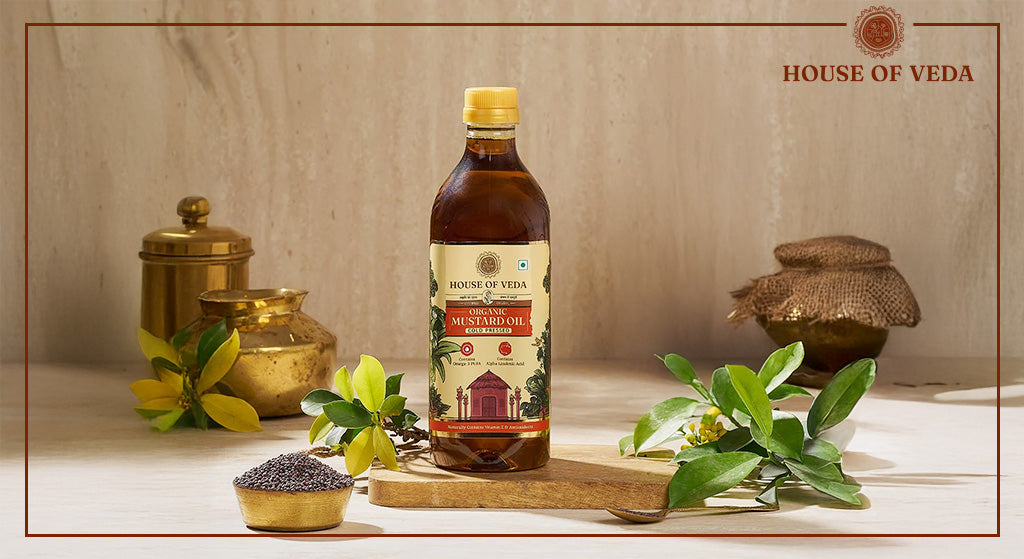
Organic mustard oil is extracted from mustard seeds grown without synthetic pesticides, herbicides, chemical fertilisers, or genetically modified inputs. The focus here is on the cultivation method rather than the extraction technique. Certified organic farming practices prioritise soil health, ecological balance, and reduced chemical exposure. However, it is important to note that organic mustard oil may still be refined unless the label specifically mentions cold pressing. For consumers who prioritise clean sourcing and chemical-free agriculture, organic mustard oil offers reassurance in terms of farming integrity.
Cold-Pressed Mustard Oil
Cold-pressed mustard oil is extracted mechanically at low temperatures without the use of chemical solvents or excessive heat. This traditional method helps retain the oil’s natural pungency, aroma, fatty acid composition, and plant compounds. Because the extraction process avoids high heat, the oil preserves more of its characteristic flavour and authenticity compared to refined varieties. Cold-pressed mustard oil often has a stronger aroma, deeper natural colour, and a more robust taste. It is commonly preferred for traditional cooking methods, pickling, and applications where the flavour of mustard oil plays a central role.
Organic Cold-Pressed Mustard Oil
Organic cold-pressed mustard oil combines the benefits of both chemical-free cultivation and minimal processing. The mustard seeds are grown using certified organic practices and then mechanically pressed at low temperatures to preserve their natural properties. This dual advantage makes it one of the most premium forms of mustard oil available in the market. Because there is minimal industrial intervention, the oil retains its traditional character while ensuring cleaner sourcing. It is often chosen by health-conscious households and those who use mustard oil not only for cooking but also for hair and skin applications.

Organic vs Regular Mustard Oil — Core Differences
When comparing organic mustard oil with regular mustard oil, the key differences lie in cultivation and processing methods.
|
Factor |
Organic Mustard Oil |
Regular Mustard Oil |
|
Farming Method |
Chemical-free cultivation |
May involve pesticides & fertilisers |
|
Processing |
Often cold-pressed mustard oil |
May be refined or chemically processed |
|
Purity |
Minimal additives |
Possible refining residues |
|
Certification |
Organic standards certified |
Not always certified |
Organic oils prioritise clean sourcing and minimal intervention, while regular oils focus more on mass production and shelf stability.
Mustard Oil Nutrition — Does Organic Make a Nutritional Difference?
Mustard oil nutrition is primarily characterised by its fatty acid profile. It typically contains monounsaturated fats, polyunsaturated fats (including omega-3 and omega-6 fatty acids), and a smaller portion of saturated fats. It also contains natural plant compounds that contribute to its strong aroma and functional properties.
In terms of mustard nutrition facts, the base fatty acid composition remains largely similar whether the oil is organic or regular. However, cold-pressed mustard oil may retain more naturally occurring micronutrients compared to highly refined versions. Excessive refining can reduce certain natural compounds, while cold pressing preserves them more effectively.
So, while the macronutrient profile may not drastically change, processing methods can influence nutrient retention and overall quality.
Health Benefits of Organic Mustard Oil
-
Contains a balanced profile of monounsaturated and polyunsaturated fatty acids.
-
Naturally provides omega-3 and omega-6 fatty acids in proportionate amounts.
-
May help support heart health when used in moderation as part of a balanced diet.
-
Contains small amounts of vitamin E, a fat-soluble antioxidant.
-
Provides naturally occurring plant compounds such as glucosinolates.
-
Supports digestive stimulation due to its pungent nature.
-
May help enhance appetite in traditional dietary practices.
-
Has a relatively high smoke point, making it stable for various cooking methods.
-
Strong flavour may help reduce excessive salt usage in meals.
-
Traditionally used for supporting circulation when applied externally.
-
Commonly used in hair massage practices to nourish the scalp.
-
Sometimes used in traditional body massage routines to promote warmth.
-
When cold-pressed, retains more of its natural aroma and bioactive compounds.
-
Free from synthetic agricultural residues when organically certified.
-
Supports overall dietary fat intake from minimally processed sources.
Mustard Oil for Cooking — Organic vs Regular: Which is Better?
When it comes to mustard oil for cooking, both organic and regular variants can perform well in Indian-style cooking. The real difference lies in processing quality, flavour intensity, and long-term purity considerations.
Smoke Point & Heat Stability
Both organic and regular mustard oil generally have a similar smoke point, making them suitable for sautéing, shallow frying, and traditional tadka-based cooking.
-
Refined regular mustard oil may tolerate slightly higher temperatures because impurities are removed during processing.
-
Cold-pressed organic mustard oil may begin to smoke slightly earlier due to retained natural compounds.
Flavour & Aroma
This is where the biggest difference appears.
-
Cold-pressed organic mustard oil retains a strong, authentic pungent aroma and robust flavour.
-
Regular refined mustard oil may have a milder taste due to processing.
Nutrient Retention & Purity
-
Organic mustard oil is derived from chemical-free cultivation.
-
Cold pressing helps retain more natural compounds compared to heavy refining.
-
Refined oils undergo processing that may reduce some natural components.
Safety considerations:
Mustard oil cooking side effects may occur if overheated excessively or consumed in very large amounts. Proper heating (until it reaches the smoking point and cools slightly before cooking) is a traditional practice to mellow its sharpness.
Mustard Oil for Hair — Does Organic Perform Better?
Many people ask, “Is mustard oil good for hair?” Traditionally, mustard oil is used for scalp massage and hair nourishment. It is believed to support scalp hydration and improve manageability.
Benefits of applying mustard oil to hair may include:
-
Helps condition the scalp
-
Supports hair smoothness
-
Provides a warming sensation during massage
Organic mustard oil for hair is often preferred because topical applications increase concerns about chemical residues. Cold-pressed and organic variants may feel lighter and more natural. However, side effects of mustard oil on hair can include irritation for sensitive scalps. A patch test is always advisable.

Organic Mustard Oil for Skin — Purity Matters?
Mustard oil benefits for skin are typically associated with massage traditions. It may help moisturise dry skin and support skin softness when applied in small quantities.
When asking, “Is mustard oil good for skin?” the answer depends on skin type. Organic oils are often preferred for topical use because they reduce concerns about pesticide residues. However, mustard oil has a strong nature and may not suit sensitive or acne-prone skin.
When Should You Choose Organic Mustard Oil?
You may consider choosing organic mustard oil if:
-
You want to reduce exposure to synthetic pesticides and chemical residues in your cooking oil.
-
You prefer ingredients sourced from certified organic farming practices.
-
You use mustard oil for topical applications such as hair massage or body massage, and value cleaner sourcing.
-
You follow traditional cooking practices and prefer oils with minimal industrial processing.
-
You are mindful of the quality and origin of the fats included in your daily diet.
-
You prioritise minimally processed foods over highly refined alternatives.
-
You prefer oils that retain their natural aroma and traditional character, especially when cold-pressed.
-
You aim to align your kitchen choices with a more conscious, purity-focused lifestyle.
Choosing organic and cold-pressed mustard oil often reflects your preference for cleaner sourcing, transparency, and traditional methods rather than heavily industrialised processing.
When Regular Mustard Oil May Be Suitable
Regular mustard oil may be appropriate for:
-
Budget-conscious households
-
Everyday cooking needs
-
Large-scale food preparation
While it may undergo refining, it still retains the core properties of mustard oil.

Conclusion: The Real Difference Comes Down to Purity & Processing
The debate between organic vs regular mustard oil ultimately centres on purity and processing methods rather than drastic nutritional differences.
-
Organic: Cleaner cultivation practices
-
Cold-Pressed: Better nutrient retention and natural flavour
-
Regular: Affordable and widely available
Both share the core benefits of mustard oil, but the quality can vary depending on the sourcing and processing methods. If purity and minimal chemical exposure are important to you, especially for hair and skin applications, organic cold-pressed mustard oil may be the preferred choice. For everyday cooking needs, regular mustard oil can still serve its purpose effectively when sourced from reputable brands.
Choose Organic cold-pressed mustard oil for authentic flavour, natural nutrients, and traditional purity in every drop.
FAQs
1. Does organic mustard oil contain omega-3?
Yes, mustard oil naturally contains omega-3 and omega-6 fatty acids in balanced proportions.
2. Can organic mustard oil be used for cooking?
Yes, it has a relatively high smoke point and is suitable for sautéing, frying, and traditional cooking methods.
3. Is organic mustard oil safe for daily use?
When consumed in moderation as part of a varied diet, it is generally considered safe for most individuals.
4. Can organic mustard oil be applied to hair?
Yes, it is traditionally used for scalp massage and hair nourishment due to its natural oil composition.
5. Is organic mustard oil good for massage?
It is commonly used in traditional body massage practices because of its warming nature and smooth texture.
6. Does House of Veda organic mustard oil contain chemicals?
House of Veda organic mustard oil is produced from seeds grown without synthetic pesticides or chemical fertilisers.
7. How should organic mustard oil be stored?
It should be stored in a cool, dark place in a tightly sealed container to maintain freshness.
Related post
30
Sep
28
Sep
21
Sep
Table of Contents
RECENT POSTS
30.September.2026
Constipation Home Remedies: What to Eat, Drink and Change in Your Daily Routine
0 Comments
28.September.2026
How to Improve Your Gut Health Naturally: Foods, Habits and Herbal Tea for Digestion
0 Comments
21.September.2026
Is Psyllium Husk Good for Gut Health? How This Soluble Fibre Supports Your Digestive System
0 Comments
17.September.2026
Stress Management Techniques: 10 Practical Ways to Feel Calmer Every Day
0 Comments