


Weight Loss Drinks: Do They Really Work, and Which Are Worth Trying?
Table of Contents
A glass of lemon water before breakfast. Green tea between meetings. A homemade “detox” drink after a weekend of eating out. Advice about weight loss drinks is everywhere, but the promises often sound simpler than the reality.
Weight loss drinks can support a weight-management routine, especially when they replace higher-calorie beverages. They do not guarantee fat loss on their own. The ingredients, preparation, added sugar and your overall eating pattern matter more than the name on the drink. [1, 2]
So, which options are worth considering? Here is how to look beyond the claims and choose a cup that makes sense for your day.
Do Weight Loss Drinks Really Work?
Some drinks are useful because of what they replace. Others contain ingredients being studied for their possible effects on body weight. These are different reasons to choose a beverage.
Replacing a sugary soft drink with plain water can reduce calorie intake, according to the US Centers for Disease Control and Prevention. Simply adding another drink without changing anything else is a different situation. [1]
For example, imagine choosing an unsweetened infusion instead of your usual sweetened iced drink. The practical question is whether the replacement reduces the calories you consume overall. Calling it a “weight loss drink” does not establish that it burns fat.
A drink is one part of the routine
The National Institute of Diabetes and Digestive and Kidney Diseases describes effective weight-management programmes as including an appropriate eating and drinking plan, physical activity and ongoing support. [2]
That makes beverages one useful decision within a much wider pattern. You can evaluate drinks for weight loss without expecting a single ingredient to do everything.
Look for evidence that matches the product
Research on a concentrated extract cannot automatically establish the effect of a brewed cup. Similarly, findings for one ingredient do not prove that a finished multi-ingredient blend produces the same result.
Before accepting a claim, ask: was the actual drink tested, in what quantity, for how long, and alongside which other changes?
Best Drinks for Weight Loss: A Practical Comparison
There is no universal winner. The best drinks for weight loss are those that fit your preferences and nutritional needs without relying on exaggerated promises.
|
Drink |
Why consider it? |
What to keep in mind |
|
Plain water |
A calorie-free replacement for sugary drinks |
Drinking it does not guarantee weight loss |
|
Unsweetened green tea |
An alternative to sweetened beverages; possible modest effects have been studied |
Evidence is uncertain, and it contains caffeine |
|
Black coffee |
An option for people who enjoy coffee without sweet additions |
Not a proven stand-alone weight-loss treatment |
|
Lemon water |
Adds flavour to plain water |
Flavouring water is different from proving a fat-burning effect |
|
Apple cider vinegar drinks |
Often promoted online |
Do not rely on dramatic claims from the retracted trial |
|
Herbal teas and infusions |
Offer flavour and variety in a beverage routine |
Ingredients, caffeine and evidence differ between blends |
1. Water for weight loss
Plain water is a straightforward starting point. It has no calories, and replacing sugary drinks with it can reduce calorie intake. [1]
Make the change specific: keep water available during your commute, choose it with lunch, or bring a refillable bottle to work. These are easier decisions to repeat than a complicated recipe.
If you want flavour, the CDC suggests additions such as lemon, lime, cucumber or berries. [3] There is no need to make every glass into a special preparation or attach a weight-loss promise to it.
2. Green tea for weight loss
The evidence for green tea for weight loss is more nuanced than “it works” or “it does nothing.”
A 2024 review of 22 randomised trials found that green tea drinking may produce a small reduction in body weight. However, the evidence was rated low to very low certainty, and longer-term research was limited. [4]
NCCIH also describes possible effects as modest and notes that outcomes can vary with product composition and physical activity. [5]
For everyday use, choose green tea because you enjoy it and because an unsweetened cup suits your routine. Avoid translating research findings into a guaranteed number of kilograms lost. Bottled sweetened tea and a freshly brewed unsweetened cup also deserve separate consideration.
3. Black coffee for weight loss
Black coffee for weight loss is another common search, but coffee should not be presented as a reliable fat-loss treatment.
The same 2024 review did not find a weight-loss effect for coffee in the included trials. [4] It can still be a beverage choice for someone who likes it, particularly when the alternative contains substantial sweet additions.
Pay attention to caffeine. The FDA lists sleep disruption, anxiety and an upset stomach among possible signs of consuming too much. [6] More coffee is not automatically a better strategy.
4. Lemon water for weight loss
Lemon water is a simple way to make water more enjoyable. The CDC includes citrus slices among its suggestions for flavouring water. [3]
That is a good reason to drink it. It is not evidence that lemon water specifically melts fat.
When evaluating lemon water for weight loss, consider the full recipe. A plain glass with lemon is different from a drink with repeated spoonfuls of sweetener. Warm or chilled, choose the version you prefer rather than following a ritual that promises dramatic results.
5. Apple cider vinegar for weight loss
Apple cider vinegar has attracted considerable attention but be careful about the research used to promote it.
In September 2025, BMJ Group retracted a widely publicised trial reporting weight-loss benefit. The publisher identified serious concerns about the study's reliability and said its findings should no longer be used. [7]
This does not settle every question about vinegar. It does mean that dramatic claims based on that trial should not guide your decision. Do not treat an online vinegar recipe as an established weight-loss prescription.
6. Herbal tea for weight loss
Herbal infusions can add variety to your daily beverage choices. But “herbal” describes the ingredients, not a demonstrated weight-loss outcome.
When choosing herbal tea for weight loss, check the actual blend and how you prepare it. Research on a herb, an extract and a finished infusion may answer different questions.
A practical approach is to enjoy the flavour, follow the pack directions and consider whether it replaces a drink you want to have less often. Assess any additional claims separately.
Can Belly Fat Burning Drinks Target Your Waist?
The phrase “belly fat burning drinks” suggests that a beverage can direct fat loss to one area. The evidence discussed here does not establish that ability.
A modest average change in body weight in a study is not proof of targeted belly-fat reduction. Neither is a temporary change in how your abdomen feels.
Ask whether the evidence measures overall weight, body composition or waist size, and whether the claimed outcome follows from those findings. Avoid judging a drink by a before-and-after image alone.
Are Morning Drinks for Weight Loss Better?
The sources reviewed here do not establish a universal best morning drink for weight loss or show that drinking it on an empty stomach is necessary.
Choose a time that makes the habit convenient. A morning cup may suit one person, while an afternoon drink may suit another.
For caffeinated options, consider your tolerance and sleep. [6] There is little value in making a routine harder to maintain because an online trend insists on a particular hour.
Instead of asking which time “activates” weight loss, ask which beverage you can prepare sensibly and enjoy consistently.
Homemade Drinks for Weight Loss: Keep the Recipe Simple
Homemade drinks for weight loss can be affordable and easy to personalise. Use them as ordinary beverages rather than complicated treatments.
Citrus or cucumber water
Add washed citrus slices or cucumber to drinking water. Keep it unsweetened if your purpose is to replace a sugary beverage. The flavour is the reason for the addition; no “detox” claim is needed. [3]
Freshly brewed tea
Prepare green tea according to the pack directions. Start with the drink as brewed before deciding whether to add anything.
A herbal infusion
Choose a blend you enjoy and follow its preparation instructions. Avoid combining several “slimming” ingredients simply because each appears in an online recipe.
Watch the additions
Honey, jaggery, sugar, syrups and packaged mixers all change the recipe. A “natural” ingredient still deserves attention to quantity.
When comparing healthy drinks for weight loss, consider the complete serving rather than judging the main ingredient in isolation.
Do Detox Drinks for Weight Loss Live Up to the Claims?
“Detox” can make an ordinary beverage sound like a special intervention.
NCCIH reports that there is no compelling research supporting detox diets for weight management or removing toxins. It also notes that early weight changes during restrictive plans can be followed by weight regain when normal eating resumes. [8]
A cucumber drink or herbal cup does not need a detox promise to be enjoyable. Choose it for its flavour and place in your routine. Be particularly cautious about plans that replace normal food with drinks for days at a time.
How to Choose a Drink That Fits Your Routine
Before buying or preparing a drink, consider five questions:
- What does it replace? Be clear about the existing beverage or habit you want to change.
- What is in the complete serving? Read ingredients and nutrition information, including additions.
- Does it contain caffeine? Check the blend rather than assuming all infusions are caffeine-free.
- Do you enjoy it? Choose something that suits your taste and preparation time.
- What supports the claims? Look for research relevant to the actual product and outcome.
Where House of Veda Fat Burn Infusion fits
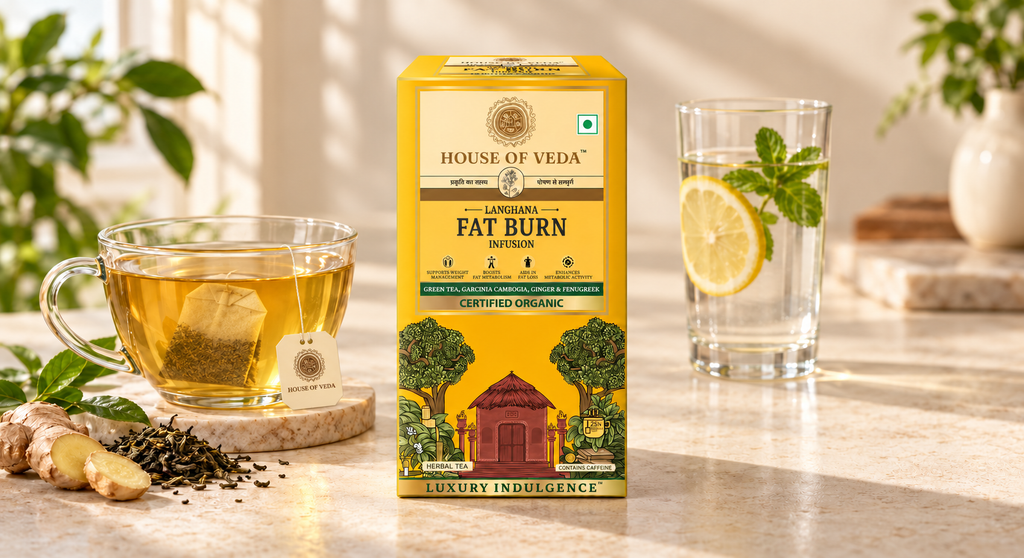
If a brewed infusion is your preferred way to pause during the day, House of Veda Fat Burn Infusion is an option to explore within your beverage routine.
Refer to the current product pack for ingredients, caffeine information and brewing directions. Consider the blend alongside your meals, activity and personal preferences. The product name alone is not evidence of a guaranteed weight-loss result.
Make the cup a considered choice: something you enjoy preparing and drinking, with expectations grounded in evidence.
Frequently Asked Questions
Do weight loss drinks work without dietary changes?
A drink cannot guarantee weight loss without considering the overall eating and drinking pattern. Replacing a higher-calorie beverage may help reduce calorie intake, but adding a drink on top of an unchanged routine is a different situation. [1, 2]
Which drink is best for weight loss?
Plain water is a practical starting point when replacing sugary drinks. Unsweetened tea or coffee may suit your preferences too. Choose based on the complete serving, your tolerance and the role it plays in your day. [1, 3]
Does lemon water help with weight loss?
Lemon can make water more appealing, but the sources reviewed do not establish a specific fat-burning effect. Its practical value is as a flavoured alternative to drinks you want to replace. [3]
Is green tea better than herbal tea for weight loss?
Green tea has been studied, with possible small effects supported by uncertain evidence. Herbal blends vary widely. No blanket comparison can establish that every green tea or herbal infusion produces the same result. [4, 5]
What is the best time to drink weight loss drinks?
There is no universally established best time in the evidence reviewed. Choose a schedule that works for you, follow preparation directions and consider caffeine tolerance. Avoid assuming that an empty-stomach routine is essential.
Can homemade drinks target belly fat?
The evidence discussed in this article does not establish targeted belly-fat loss from homemade beverages. Evaluate the whole recipe and avoid interpreting temporary changes in fullness or scale weight as proof of fat loss.
Choose a Cup You Can Keep Coming Back To
Weight loss drinks are most useful when you give them a clear, realistic role. Compare ingredients, preparation and evidence, then choose an option that fits the way you actually live.
You do not need the most elaborate recipe or the strongest promise. A considered beverage choice, repeated as part of a broader routine, is a more practical place to start.
Explore House of Veda Fat Burn Infusion if a herbal cup is your preferred daily pause.
References
- CDC: About Water and Healthier Drinks
- NIDDK: Choosing a Safe and Successful Weight-loss Program
- CDC: Rethink Your Drink
- Jayedi et al., 2024: Comparative effects of tea and coffee drinking on body weight in adults
- NCCIH: Green Tea
- FDA: Spilling the Beans — How Much Caffeine Is Too Much?
- BMJ Group: Retraction of trial on apple cider vinegar and weight loss
- NCCIH: Detoxes and Cleanses
Related post
08
Oct

30
Sep
28
Sep
Table of Contents
RECENT POSTS
08.October.2026
Navratri Fasting Food: What Can I Eat? Food List, Recipes and a Balanced Meal Plan
0 Comments
30.September.2026
Constipation Home Remedies: What to Eat, Drink and Change in Your Daily Routine
0 Comments
28.September.2026
How to Improve Your Gut Health Naturally: Foods, Habits and Herbal Tea for Digestion
0 Comments