


Are You Eating the Right Kind of Fibre? Soluble vs Insoluble Fibre Explained
Table of Contents
Digestion plays an important role in maintaining good health! Are you working on it? Have you added salads, grains, and fruits to your diet? If "yes" and still suffering from bad digestion or feeling bloated! The reason is that you have started taking fibre to improve digestion, but before consuming it, understand body fibre requirements. You need to know about the variety of fibre available. There is Soluble fibre like dal, rajma, oats, and Insoluble fibre like salads.
Your body is different from others! You must check what your body requires. Most people get benefits from soluble fibre, and most from insoluble! So, it's important to understand the difference between the two! Check out this informational blog and get an answer to your query.

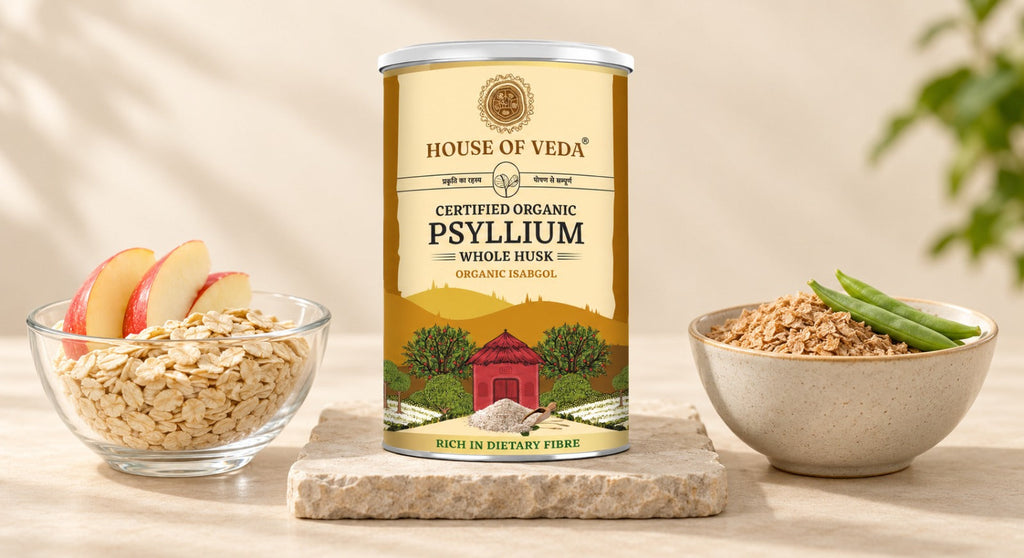
Organic Psyllium Whole Husk (Isabgol) 100g
10% Off
Fibre Isn't Just One Thing
Fibre takes a long time to digest and may not be completely digested! Yes, this is true! Fibre is divided into two types: soluble and insoluble. You must understand that plant food is a mixture of both soluble and insoluble fibre. You did not have to calculate which fibre is best for you, it;s just that it depends on your body tolerance, how hydrated you are throughout the day, and which fibre varieties you can easily digest.
So, it's advisable, before taking in fibre, to understand the types of fibre. Does my body digest soluble and insoluble fibre, and is all dietary fibre easily digestible or not? Yes, this is a fact: for good digestion, you need the right Fibre proportion but study the body's requirements and intake accordingly.
Soluble vs insoluble fibre difference, digestive benefits, water absorption and food sources
Soluble V/S Insoluble Fibre
Check out the difference between Soluble and Insoluble Fibre! The similarity between the two is that both are plant-based foods.
Soluble Fibre
Soluble Fibre comes from plant-based foods! It dissolves in water, forms a gel-like structure, and mixes in the stomach to maintain gut health. Soluble Fibre is easily digested in the body and helps to regulate stool movement. It also helps to maintain blood sugar levels by slowing down sugar absorption and helps to control diabetes. Apart from that, it controls cholesterol, lowers the risk of heart disease and is good for appetite, and helps in weight loss.
Some of the soluble fibres are Oats, Beans, vegetables, fruits, and barley
Insoluble Fibre
As the name suggests, Insoluble fibre is the fibre that does not get dissolved in the body. It is also known as "Roughage". It remains in the body, increases the stool, and helps in relieving constipation. Some of the insoluble fibres are wheat bran, whole wheat, nuts. It also helps in weight management.
Soluble and insoluble fibre sources in Indian foods, including psyllium husk, oats, dal, whole-wheat atta, vegetables, nuts and seeds
Which Type of Fibre Does Your Digestion Need?
Intake Soluble and Insoluble Fibre
If you have a problem passing stool, you must intake both soluble and insoluble fibre regularly! Yes, soluble fibre like Oats, lentils, and apples in breakfast helps you to form a gel in your stomach, which softens your stool and lets it pass. And insoluble fibre like seeds, fruits, nuts, and vegetables add pressure to your stool and relieves constipation. With both types of fibre, you must increase your water intake.
Whole Plant Foods helps in Digestion
Eating whole plant foods helps in digestion! If you are suffering from poor digestion, you must add whole grains to your diet, like beans, chickpeas, and green vegetables. It helps to maintain good gut health and promotes better stool movement.
Soluble Fibre Reduces Bloating
Bloating makes you feel unwell! If you feel bloated after having a meal, you must add soluble fibre to your diet. It easily dissolves in water and helps with better digestion. For example, chia seeds and apples.
Soluble Fibre helps in relieve constipation
If you still have constipation after dietary changes, add Psyllium husk to your diet! It will help in better digestion by adding bulk to the stool and eliminating waste from your body.
Why should we take Fibre with fluids?
Taking fibre with water helps eliminate waste from your body. It helps promote better digestion. For example, if you are consuming Isabgol in the morning, take it with water or curd so that you can easily digest it. Taking it with fluids is important because of several reasons:
Aids in Constipation
Fluids help remove bulk stools from the body and reduce hard, dry stool and constipation problems. For that, drink at least 2 to 3 litres of water or other fluids in a day.
Reduces side effects
Are you suffering from Gas, bloating, or cramping issues? You must drink fluids with your daily fibre intake. This will make you feel comfortable.
Increase flow
Fluids help fibre do its work properly! By increasing fluids, fibre intake helps to remove waste from your intestinal tract.
Soluble and Insoluble Fibre in Everyday Indian Food

Indian Kitchen without fibre is incomplete! Yes, have you ever had food without fibre? It is not possible! When we wake up in the morning and start preparing the first meal of the day, we usually prepare oats with milk, Apples, chana salad, and much more. Even before breakfast, most people take psyllium for better digestion. That means the day starts with soluble fibre.
For lunch, we prefer eating dal with sabzi and chapati that is also a combination of soluble and insoluble fibre. After that, at evening snacks, we munch on fruits with nuts, and for dinner most of the Indian people choose rajma and chana with some vegetables. That means throughout, we consume fibre. But for better results, take fibre with lots of water.
Why Does Fibre Cause Bloating?
Do you feel bloated after having a meal? It's not always because of Fibre! You must understand that fibre must be taken with water and according to your body's needs. Take fibre in the right quantity.
The reasons for bloating are:
Increase in Fibre: Take the right amount of fibre! That means do not overeat! For example, you are consuming nuts and your intake more than your body requires, you may feel bloated. And slowly and gradually increase fibre!
Large number of vegetables: If you are consuming raw vegetables beyond your body's limit, you may feel bloated. Raw vegetables take time to digest, and it might cause constipation, which leads to bloating.
Inadequate Fluid: Water plays an important role in good digestion! And water with fibre is very important! Water helps to mix fibre in the body and helps to smooth digestion.
Constipation: If you are suffering from constipation, you might not be able to digest fibre. You must check your health and accordingly take in fibre.
Digestive Tolerance: Everyone has a different body and so have different stamina! If your body has low tolerance to digest fibre, you might feel ill. And if you have good tolerance, you can digest fibre easily.
Where Does Psyllium Husk Fit?
Psyllium Husk is a blessing! Yes, intake it in the morning, and let the magic begin! It helps relieve constipation and supports better gut health. Psyllium husk is known as Isabgol.
Every Indian kitchen has Isabgol! It has been there for decades! You must remember your grandparents also say to have it in the morning for better digestion. Yes, it is a fact: one spoon of Isabgol in warm water or in curd can help with digestion and relieve constipation. Wake up in the morning and have it; you will feel like heaven! It adds pressure to your stomach and eliminates waste from your body.
Gel-forming Fibre:
This dissolves in the body and forms a gel-like structure, which removes waste from the body. Without thinking, you can have this and feel relaxed. But you must take it with water or curd. For better digestion, increase your water intake.
Absorb in water:
Psyllium husk is a soluble fibre; it gets easily absorbed in water! You must get up in the morning, take a bowl, make it lukewarm, and mix psyllium husk in it! This drink will aid digestion and relieve constipation.
Taken as a supplement:
Gym professionals consume psyllium husk as a supplement! Yes, before doing gym sessions, have one spoon of Isabgol with lukewarm water; it will help with better digestion. And good digestion helps in performing better exercises in the gym.
Take with Fluid:
Always take psyllium husk with fluid! It will ease digestion! It easily dissolves in the body; you will not feel nausea or vomiting.
Explore House of Veda
Want to add fibre to your diet? Add Organic Psyllium husk from House of Veda. You must read the instructions on the packaging and take them accordingly. It's easy to take; just take one glass of lukewarm water or curd, mix one teaspoon of husk, and have it. Check out the website for more details.
When Fibre May Not Be the Complete Answer
Sometimes fibre is not for you! Yes, that's true. If, after taking fibre, you are having repetitive constipation with bleeding, or stomach pain or vomiting, you must stop. If you are experiencing weight loss or changes in bowel movements, stop consuming fibre. Sometimes your stomach sends alarming messages that you must understand.
Final Thoughts
We consume fibre in different forms! It starts with oats in the morning, dal at lunch, to chana salad at night! But have you thought about starting your day with something more beneficial? Start taking House of Veda Psyllium Husk, take it with lukewarm water, and feel stress-free. Daily consumption of psyllium husk can relieve constipation and promote better digestion. Visit House of Veda's website and check out its fibre and other herbal products. Connect to the team for more details.
FAQs
Is psyllium husk soluble or insoluble fibre?
Yes, psyllium husk is a soluble fibre! It easily dissolves in water and is digested by your body. It is easy to take! Just add one teaspoon of psyllium husk to lukewarm water or curd.
Which fibre is better for constipation?
Soluble fibre is better for constipation. You can add psyllium husk to your morning routine and get ease in bloating and constipation.
Why am I constipated even after eating fibre?
Sometimes you are not taking fibre with fluids! Yes, drink as much fluid as you can!
Can I take psyllium husk every day?
Yes, with all the instructions on the packaging box and your doctor's advice, you can take psyllium husk daily.
Isabgol raat ko lena chahiye ya subah?
Isabgol subah lena chahiye garam pani ke sath.
Related post
08
Oct
30
Sep
Table of Contents
RECENT POSTS
08.October.2026
Navratri Fasting Food: What Can I Eat? Food List, Recipes and a Balanced Meal Plan
0 Comments
30.September.2026
Constipation Home Remedies: What to Eat, Drink and Change in Your Daily Routine
0 Comments