



Stress Management Techniques: 10 Practical Ways to Feel Calmer Every Day
Table of Contents
Your responsibilities will end one day, but your mind will replay them again and again! Your mind won't stop! Right? Work pressure, daily tasks, or work routine will never leave you stress-free. So what should you do in such a situation? Another issue is that nobody is screen-free. Whether you are doing household work, office work, or any other task, you need a screen to complete your task! But it comes with stress, undoubtedly! Stress is everywhere, in every age group. We are not saying it's easy to remove stress, but some techniques can help in managing stress levels.
In this blog, you will learn about stress management techniques! There are 10 different techniques! So study all of them and use the techniques that suit you best! Everyone is different, and so is their stress! So stay connected with our blog; it will help you out.
What is Stress Management?
Stress management means managing your stressors and identifying stress that triggers you emotionally and physically. Stress management does not reduce stress levels, but it helps you recognize and avoid stressors. Apply stress management techniques to cope with stress and build resilience.
You might feel that nobody can avoid stress; you cannot do anything about it! For example: your work will increase daily, you have to pay bills, you are bound by work and family responsibilities, and more. But you can control stress. To manage stress, use effective stress management techniques, including calming techniques and lifestyle changes.
Difference between stress removal and stress management! Stress removal means eliminating stress ond, whereas stress management techniques prepare you to respond to stress and the changes you make to cope with stress. For example: work pressure is increasing; you cannot avoid it, but you can break your work into smaller tasks.

House of Veda
Calming Infusion
A soothing blend to ease stress, calm your mind & support better sleep — naturally caffeine-free.
Buy NowTop 10 Stress Management Techniques
It's very difficult to handle stressful situations! But you can try to eliminate things that cause stress; we have 10 stress management techniques that will help out! It depends on you which technique is best according to your situation.

Breathing is the best stress reliever
Excessive stress weakens your muscles, increases your heart rate, and makes your breathing faster. In this situation, try a slow breathing exercise: on the count of four, inhale, and on the count of six, exhale. Do this 3-4 times, and you will feel better. We are not saying it will remove your stress, but it can control it.
What do you have to do? Whether you are at home, at work, or anywhere, whenever you feel stress, do a breathing exercise; it will ease you. Do a breathing exercise in the morning or when you feel stressed out.
Mindfulness and Meditation
It helps to calm you by training your brain to focus on the present situation and not have any negative thoughts. You can practice this stress technique by lying down in a comfortable position, allowing yourself to settle, focusing on your breathing, and thinking about every situation positively. If you get distracted, bring yourself back to breathing. This technique has several benefits; it lowers your blood pressure and your heart rate.
Whether you are a working person, entrepreneur, or a housewife, everyone must try this technique, and you will feel some stress relief.
Doing Exercise
Exercise is the need of the hour! During physical activity, the body releases hormones that help to reduce stress levels. Nowadays, companies have gyms for their employees; you must take a break from work and exercise to relieve stress. Whether you are a working professional, a working woman, or a housewife, everyone has stress, and to get some relief, you must exercise regularly.
Journaling
Pen down your thoughts in a journal! Write down which situations trigger you! Write in clear words about your tensions. This practice will help you understand your trigger points and relax and calm. At least do this exercise 3 to 4 times a day and feel the change in yourself. You can practice at home or during work breaks.
Break your work into smaller tasks
If you have office work, break it into smaller tasks; it helps relieve stress. For example, you have to make an employee report and assign tasks to your group, make tomorrow's work schedule, and take an online meeting. You have to decide which task is important to do now and which can wait until tomorrow. Manage stress by focusing on today's work target and doing extra work the next day. You must plan for today and tomorrow; it will not reduce your stress, but it gives you some relaxation in the moment. Try it out!
Set boundaries for notifications
Waking up with notifications on your phone! Daily notifications work as a stressor; you must pause notifications that are no longer useful. You must set an alarm for the notifications that are related to your work. You must check your messages and emails regularly; try to avoid them for some time.
Notifications are distractions! Do not let them distract you from your work. You must focus on your work and be notification-free for one part of the day. This technique helps you:
Choosing your target work and avoid extra notifications.
Take screen-free pauses
How to calm your mind! This is the question that must be going through your head; the answer is to control your screen time! More screen time gives you more stress! Instead of checking emails, messages, or notifications, go for a walk! You can enjoy light music in the dim light or go on a long ride. You can even choose your favourite hobby, cooking, dancing, reading books, and spend some time stress-free without any screen time.
Spending time away from your phone makes you feel a little better. Make a list of activities that you love to do each day, make some time for yourself, and do the activities; it will not completely reduce your stress, but you will feel better.
Create a difference between work and home
There is a difference between work and home! If you have a remote job or work as a freelancer at home, you must make time for yourself and for your family. You must go out with friends and family! You can make a walking schedule, listen to music, or do what you want to do. It is crucial that if you have a work-from-home job, you do not work; this will only cause stress. If you want to manage stress, do what your heart says.
By focusing on other activities, you will maintain balance between work and play.
Calming evening ritual
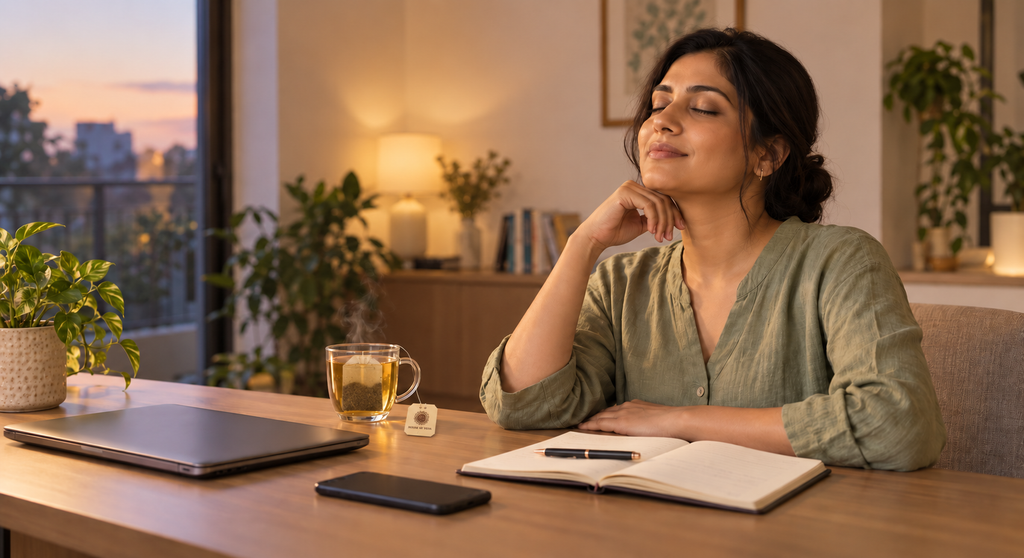
Work pressure is tough! Your responsibilities will not let you be stress-free! What to do to stay calm? Make an evening ritual intake House of Veda's Chamomile tea; the flavourful cup of tea helps to manage stress. Boil water, add a chamomile tea bag, and drink it.
Make it your evening ritual: enter your home, dim the lights, play light music, and have chamomile tea. It contains all the ingredients that help you relax and relieve stress; the best part is that chamomile tea is caffeine-free, helps you to sleep better, and relaxes your mind.
Talk to Someone!
Share your heart with someone you trust! This will help you out! You will understand which topic gives you stress, and after sharing your thoughts, you will feel better. This is the best way to understand yourself, and the other person will also share his/her thoughts and ideas, which will help you. Share what you feel; it is one of the stress busters.
So, all the above techniques are useful in managing stress! Try them out and feel the difference.
Why Does Everyday Stress Feel So Difficult to Switch Off?
Different situations create different stress! Yes, this is true. All day, we go through different stresses, but you have to think about which stress triggers you. For example: a regular conversation with your colleague about work pressure, driving a car in traffic, a poor conversation with your loved one, or making a wrong work decision. You must think about and work on that particular stress!
Our brain processes incomplete tasks! Daily stress is work on time! In between work, you must be distracted by notifications, emails, and messages. Even switching between family and work causes stress. Other problems like poor sleep can lower resilience on the next working day. That means your body gets tired, but your mind is active. It is important to understand how to calm your mind.
Immediate vs. Long-Term Stress Management Techniques

Immediate Stress Management Techniques!'
1. For immediate relief, try a slow breathing exercise, stretching, going for a walk, journaling, or taking a screen-free pause.
2. Follow a wind-down ritual by drinking chamomile tea! Follow a morning or evening routine; have the tea for mental relaxation.
3. Use the 5-4-3-2-1 Grounding technique: watch five things around you, touch four things, hear 3 things, smell two things, and taste one thing.
Long-Term Stress Management Techniques
1. Techniques used are a sleep routine, regular movement, meditation, and progressive muscle relaxation. A sleep schedule is important.
2. Professional advice is important to manage stress; guide you with techniques that help you control stress.
3. Focus on a balanced diet; limit your sugar and alcohol
How to Build a Stress Management Routine You Can Continue
There are three steps to follow:
1. Choose one trigger
You need to choose a stressor that triggers you, for example, work pressure after work, or work thoughts after working hours.
2. Choose response
In this step, write down your thoughts or what to do tomorrow, and close your laptop. In this step, take action and try to cope with stress. You will not avoid stress; adapt to it.
3. Add Calming Infusion
Yes, dim your room light, switch on the music system, and enjoy the light music with a cup of warm chamomile tea. Follow this routine regularly to relieve stress.
When Should You Seek Professional Support?
You must check in with yourself if you feel persistent stress regularly hampers your sleep, affects your relationship, or you feel like having panic attacks or having thoughts of self-harm; in such cases, having words with a medical professional is important. Yes, stress management techniques are available, but they cannot match professional guidance.
Conclusion
Stress is everywhere! It is crucial to deal with it! Check out the top 10 stress management techniques! Go through all the techniques and follow the one that suits you best. Add Chamomile tea from House of Veda and feel the magic! Tea, as a calming infusion, relaxes your mind, helps you sleep better, and relieves stress. For more information, visit the House of Veda website and check out all the products that help to manage stress. Call our team with your query.
FAQs
What are the five effective stress management techniques?
The five effective stress management techniques are breathing, movement, boundaries, journaling, and consistent sleep.
How can I calm my mind after a stressful day?
You can calm your mind by doing a slow breathing technique, knowing your trigger point, and focusing on the next action.
Can tea help with stress management?
Chamomile tea helps to calm down; it is a caffeine-free infusion that works as a calming ritual. Tea does not treat stress.
Is Chamomile tea suitable for an evening routine?
Chamomile is used as an evening ritual to promote relaxation and uplift mood. If you have allergies, health issues, or pregnancy, consult your health professional before intake.
How long does it take to build a stress management routine?
There is no exact time for stress management! You have to be regular and consistent.
Related post
30
Sep

28
Sep
21
Sep
Table of Contents
RECENT POSTS
30.September.2026
Constipation Home Remedies: What to Eat, Drink and Change in Your Daily Routine
0 Comments
28.September.2026
How to Improve Your Gut Health Naturally: Foods, Habits and Herbal Tea for Digestion
0 Comments
21.September.2026
Is Psyllium Husk Good for Gut Health? How This Soluble Fibre Supports Your Digestive System
0 Comments
17.September.2026
Stress Management Techniques: 10 Practical Ways to Feel Calmer Every Day
0 Comments