
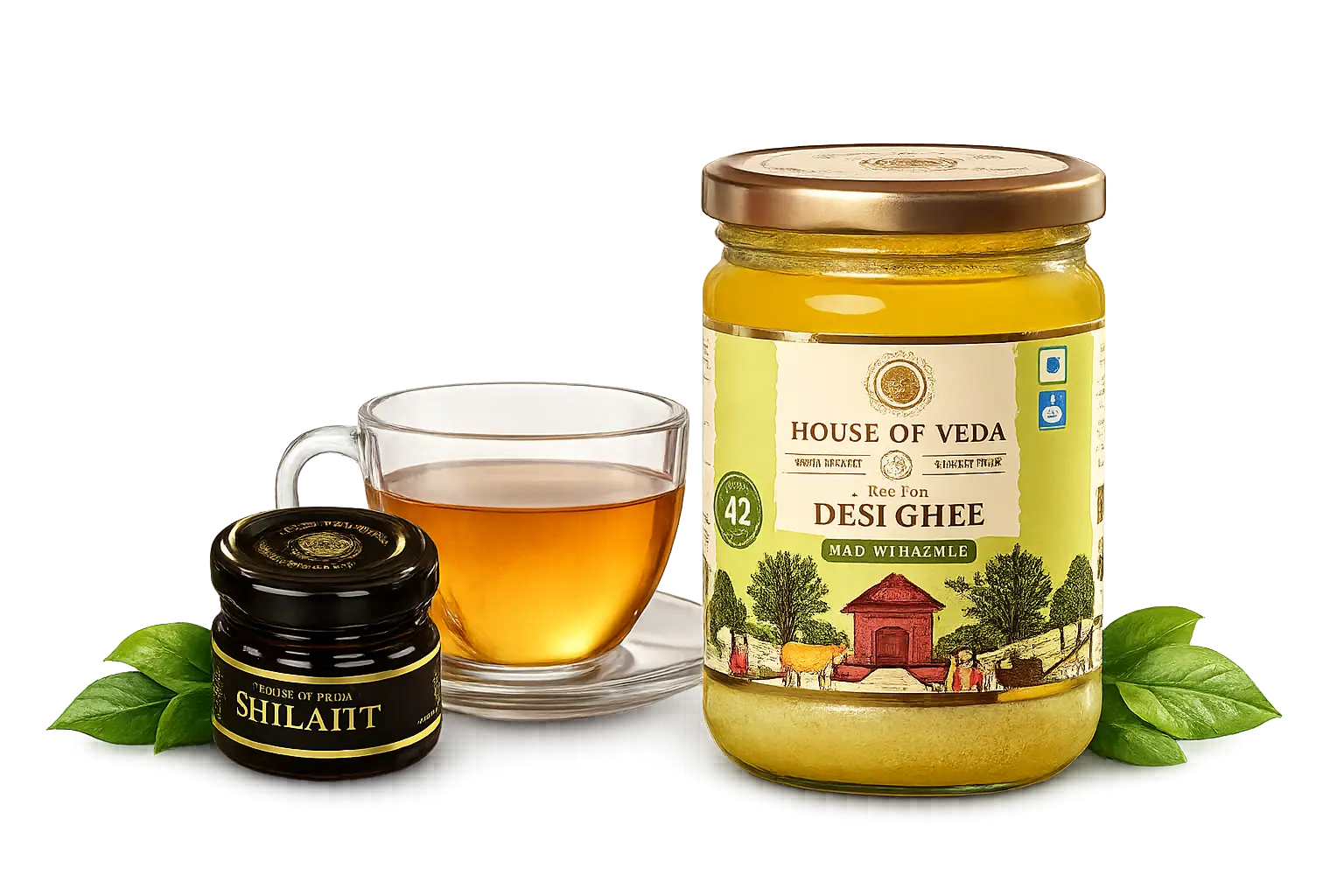


Benefits of Desi Ghee for Gut Health
Table of Contents
Introduction: Desi Ghee as a Digestive Ally
In Ayurveda, ghee is considered one of the most supportive fats for digestion. It is also deeply nourishing and easy to digest, unlike processed and refined oils available in the market. And in Ayurveda, it says that healthy digestion begins with proper lubrication and nourishment of the digestive tract. If the gut is dry, irritated, or weakened, digestion becomes irregular, and ghee is known to support internal softness and balance. Therefore, it is a trusted daily source of maintaining digestive comfort and resilience.
Desi Ghee and Agni (Digestive Fire)
Agni, or digestive fire, is central to Ayurvedic health. If the Agni is strong and balanced, the food we eat gets digested efficiently and converted into nourishment rather than waste. Desi Ghee acts as the best supporter to steady digestion without overheating the system. It not only helps food move smoothly through the digestive process but also supports complete breakdown and assimilation. When ghee is used in moderation, it may also help prevent erratic, weakened, or overly sharp digestive fire, which encourages a calm and stable digestive rhythm.
Desi Ghee and Gut Lining Protection
The intestinal lining is essential for healthy digestion and overall well-being. In Ayurvedic understanding, dryness and irritation in the gut are often signs of imbalance that may affect digestion over time.
Ghee is valued for its naturally soothing and nourishing properties. Its lubricating nature may help support the internal tissues of the digestive tract, including the intestinal lining. By helping maintain natural moisture and softness within the gut, ghee may contribute to a more comfortable digestive environment.
Regular, moderate use of ghee in meals may also help reduce dryness and irritation, which can sometimes contribute to digestive discomfort.
Ghee in Managing Gas, Bloating, and Constipation
Digestive issues such as gas, bloating, and constipation are often associated with Vata imbalance in Ayurvedic philosophy. Vata tends to create dryness and irregular movement in the digestive tract.
Because ghee is naturally grounding and lubricating, it is often used in Ayurveda to help calm Vata in the gut. When added to warm meals, ghee may help support smoother digestion and promote regular bowel movements.
Its nourishing nature can also help ease dryness-related digestive discomfort, making elimination more comfortable and consistent.
Ghee and Nutrient Absorption
Healthy digestion is not only about breaking food down, it is also about how well the body absorbs nutrients.
Ghee plays an important role in the absorption of fat-soluble nutrients, which require dietary fats for proper assimilation. In Ayurveda, ghee is often described as a carrier that helps nutrients penetrate deeper into bodily tissues.
When digestion is functioning well, adding a small amount of ghee to meals may help the body make better use of the nutrients present in food.
Ghee, Ama Reduction, and Gut Cleanliness
Ama, also known as accumulated digestive toxins, is believed to form when food is not fully digested. However, if the Agni is balanced, it helps prevent this accumulation. For this, ghee plays a fantastic role by supporting smooth digestive processes, which reduces the likelihood of undigested residue. Also, ghee promotes proper lubrication and steady elimination, which contributes to overall digestive cleanliness.
Ghee and Gut Immunity (Ojas Support)
In Ayurveda, Ojas represents vitality and immunity, and healthy digestion is closely linked to strong Ojas. When digestion functions efficiently, the body is better nourished and resilient. Ghee is traditionally considered supportive of Ojas because it nourishes tissues gently without burdening digestion. By maintaining digestive balance, ghee indirectly supports gut-associated immunity and overall strength.
How to Use Desi Ghee for Gut Health (h2)
- Consume ghee in small and appropriate quantities as part of your daily diet.
- Add ghee to warm and freshly prepared meals to improve digestion.
- Mix it into cooked grains such as rice or millets.
- Stir into vegetables or lentils for smooth digestion.
- Use it as a finishing fat over warm foods rather than repeatedly reheating it.
- Some traditional practices suggest taking a small amount of ghee with warm water on an empty stomach when suitable.
- Ensure the quantity remains moderate to avoid overconsumption of fats.
- Use consistently rather than in large, occasional amounts for better digestive balance.
- Pair with wholesome, freshly cooked meals for optimal digestive support.
Check out the complete benefits a2 desi ghee—>
Conclusion: Desi Ghee as Daily Digestive Support
Ghee offers a simple, time-tested approach to digestive wellbeing. Its lubricating, nourishing, and stabilising qualities make it suitable for long-term use when aligned with balanced eating habits. Rather than acting as a quick remedy, ghee works gently to support the natural intelligence of digestion. When incorporated mindfully into daily meals, it can serve as a sustainable and supportive companion for gut health.
Explore House of Veda Gir Cow Desi Ghee!
FAQS
1. Does ghee improve gut health?
Ghee is traditionally considered supportive of digestion in Ayurveda due to its lubricating and nourishing qualities. It may help maintain smooth digestion when used in moderation as part of a balanced diet. By supporting digestive comfort and aiding nutrient absorption, ghee can contribute to overall gut wellbeing. However, its benefits depend on portion size and overall dietary habits.
2. Does Desi ghee have omega-3?
Yes, ghee naturally contains small amounts of omega-3 fatty acids, along with other beneficial fats such as monounsaturated and saturated fatty acids. The exact amount can vary depending on the quality of milk used and the animal’s diet. Grass-fed ghee may contain slightly higher levels of certain beneficial fatty acids.
3. Which time is best for eating Desi ghee?
Ghee is commonly consumed with warm meals, particularly during lunch when digestion is considered strongest in Ayurvedic tradition. It can be added to freshly cooked grains, lentils, or vegetables. Some traditional practices also suggest consuming a small amount of ghee with warm water in the morning, but this should be done mindfully and in moderation.
4. Does ghee cleanse the gut?
Ghee does not act as a cleanser in the conventional sense. However, in Ayurvedic understanding, it may support digestive balance and smooth elimination when digestion is functioning properly. Its lubricating nature can help reduce dryness in the digestive tract, which may indirectly support regular bowel movements. It should be used moderately as part of a balanced lifestyle rather than as a detox remedy.
Related post
30
Sep
28
Sep
21
Sep
Table of Contents
RECENT POSTS
30.September.2026
Constipation Home Remedies: What to Eat, Drink and Change in Your Daily Routine
0 Comments
28.September.2026
How to Improve Your Gut Health Naturally: Foods, Habits and Herbal Tea for Digestion
0 Comments
21.September.2026
Is Psyllium Husk Good for Gut Health? How This Soluble Fibre Supports Your Digestive System
0 Comments
17.September.2026
Stress Management Techniques: 10 Practical Ways to Feel Calmer Every Day
0 Comments